
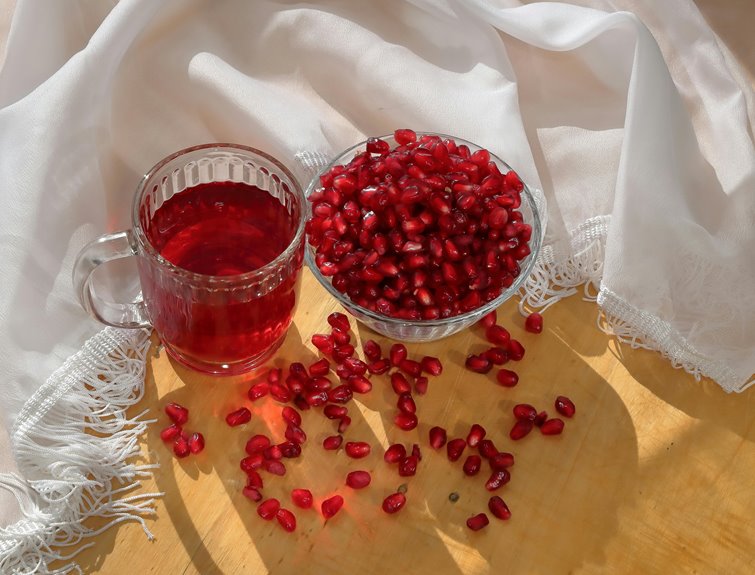
You can turn pomegranate seeds into juice without much fuss, though the hard little centers may remain behind. What matters most is the juicy arils. Once you know how to separate them cleanly, you can make a bright drink with less bitterness. The key is choosing the right tool, removing the white pith well, and knowing what to strain out next.
Can You Juice Pomegranate Seeds?
Yes, you can juice pomegranate seeds, and that’s usually the best way to get their bright, tangy juice without the bitter bite of the rind or white pith.
Remove the arils, then blend or press them lightly and strain out the bits. A quick pulse helps protect the juice yield and keeps the flavor clean.
This simple step also supports the health benefits people often value, since you keep more of the fresh juice and less of the tough parts.
If you’re new to it, don’t worry. You only need a bowl, a strainer, and a little patience.
With that, you can make a smooth drink that tastes fresh, looks vivid, and feels like a small win.
Pomegranate Seeds vs. Arils
Whenever you look at a pomegranate, you’re really seeing arils, the juicy sacs that contain the seed inside.
The hard seed gives the aril its crunch, while the juice sits in the fleshy outer part. That’s why you can eat them whole or press them for liquid.
Arils work well for juicing, even though the seed itself isn’t the part you drink.
Seed Structure Differences
Strictly speaking, what most people call a pomegranate seed is really an aril, and that difference matters whenever you want juice instead of grit.
You aren’t working with one hard kernel only. Inside each ruby pocket, the seed coat anatomy wraps a tiny true seed, while the aril membrane structure holds the juicy flesh you want.
That outer layer feels soft and flexible, so it breaks easily when you press it. The inner seed stays firm and gives texture. Because of that split, you can crush the aril without fully grinding the seed. Once you understand this, juicing feels less mysterious and more manageable. Your bowl of fruit can become juice with less concern about toughness or surprise crunch.
Aril Juice Content
A single pomegranate aril holds more juice than its tiny size suggests, and that is the real reason these little gems work so well in a glass. When you compare pomegranate seeds and arils, you are really talking about the same juicy pocket wrapped around a hard inner seed. That pocket gives you the juice yield you want, while aril sweetness adds a bright, tart-sweet taste.
| Part | Juice | Taste |
|---|---|---|
| Aril pulp | High | Sweet-tart |
| Inner seed | None | Bitter |
| White pith | Low | Harsh |
Eating Vs Juicing
Although people often say pomegranate seeds, they usually mean the arils, and that small mix up matters. When you eat fresh arils, you get the juicy sacs, fiber, and a crisp pop that feels satisfying.
If you juice them, you lose some fiber but gain a smoother drink that’s easier to sip quickly. So your choice depends on what you want today. For raw snack benefits, eating them whole can help you feel fuller and enjoy the texture.
Juicing works better when you want quick flavor, a bright pour for breakfast, or less chewing. Either way, you’re still getting a bold fruit that fits your routine. Choose the option that matches your needs, and you’ll fit right in with pomegranate fans.
How to Juice Pomegranate Seeds
First, separate the arils from the rind and as much white pith as possible, since that bitter part can affect the taste.
Then juice them with a blender, press, or even a simple hand method, depending on what you have available.
After that, strain the liquid well so you get smooth juice instead of a cloudy, seedy result.
Seed Removal Tips
How do you get the best juice from pomegranate seeds without making a bitter mess? Start with clean arils, and you’ll save yourself stress later. The water bowl method makes seed removal easier because the arils sink while the pith floats, so you can scoop out the sweet parts quickly.
Try these pith removal tips to keep the flavor bright:
- Cut the fruit open over a dark towel.
- Work under water to catch loose bits.
- Skim off white pith as you go.
- Drain the arils well before you juice them.
When you remove the bitter pieces first, the rest of the process becomes smoother and more efficient. Your juice will taste better, and the process will be easier to manage.
Juicing Methods
You can turn pomegranate arils into fresh juice with a few simple methods, and none of them need to feel messy or difficult. For quick extraction, use a blender with brief pulses, then pour the mixture into a fine sieve. For a gentler approach, try small batch juicing tools such as a hand press or citrus juicer. These options fit easily into your kitchen routine and help you feel confident.
| Method | Best for |
|---|---|
| Blender | Fast, easy batches |
| Hand press | Quiet, hands-on work |
| Citrus juicer | Small, compact portions |
You can also use a sealed bag and rolling pin for a simple option. Keep the arils clean, and you will get bright juice that feels tailored to your needs.
Straining Juice Properly
Once the arils are crushed, straining does the real cleanup work. It turns a thick mixture into smooth pomegranate juice. Use a fine mesh strainer so you keep the bright liquid and leave the gritty bits behind.
For easy pulp separation, set a sieve over a bowl and pour slowly.
- Use a spoon to press gently.
- Let the juice drip without rushing.
- Lift the mesh and scrape the underside.
- Check for cloudy bits, then strain again.
If the pulp still clings, line the sieve with cheesecloth for a second pass. You’ll get a cleaner pour, and your glass won’t feel crowded. This small step helps you enjoy fresh juice with less fuss and more confidence.
Best Tools for Juicing Pomegranates
A few simple tools can make juicing pomegranates much easier, cleaner, and far less frustrating. You’ll do well with basic juicing tools such as a blender, a fine mesh sieve, and a bowl. If you prefer less mess, a manual press can help you crush the arils with little effort.
A citrus juicer also works well for small batches, while a sturdy spoon and wooden board give you more control. When you’re handling a large amount of fruit, use a large strainer and a spatula to press out every drop. Keep a dark towel nearby because pomegranate juice stains easily. With the right setup, you can move from fruit to fresh juice faster and with more confidence.
Do Pomegranate Seeds Affect Taste?
Yes, pomegranate seeds can affect the taste, and they often do more than people expect. When you juice arils, the tiny hard centers can add a stronger flavor if you crush them too much. That’s why balancing sweetness matters.
- Clean arils give you a brighter, cleaner sip.
- Extra pith can add a sharp edge.
- Gentle pressing keeps the juice smooth.
- Fine straining helps preserve the fruit’s natural character.
If you want a drink that feels welcoming and fresh, treat the seeds with care. They should support the juice, not overpower it. So when you work with pomegranate, focus on taste first. A little attention goes a long way, and your glass will thank you.
How to Avoid Bitter Juice
To keep pomegranate juice from turning bitter, treat the arils gently from the start. Rinse them well, then remove any white pith, since it can upset the sweetness balance.
Next, pulse the arils briefly instead of blending them hard. This cracks the juice sacs without grinding the hard seeds. After that, strain the mixture right away through a fine sieve or cheesecloth. This keeps seed bits out and prevents the flavor from becoming diluted by cloudy pulp.
If the juice tastes sharp, add a small amount of lemon juice or a tiny pinch of salt. Both can brighten the flavor without masking it. When you work carefully, you get a smoother, more balanced drink that’s worth serving.
What to Do With Leftover Pulp
Should you already have strained out the juice, don’t toss the leftover pulp right away. You can still give those kitchen scraps a useful second life. Try these easy options:
- Stir the pulp into muffins or oatmeal.
- Freeze it in small portions for later use.
- Mix it into yogurt for extra texture.
- Add it to compost for your garden.
If you prefer a simple routine, keep the pulp in a covered container and use it soon. That helps you stay organized and reduces waste. You can also share extra pulp with a friend who enjoys cooking.
With a little care, your leftover pulp doesn’t have to feel like trash. It can be part of your next practical kitchen step.
Tips for Better Pomegranate Juice
For brighter, cleaner pomegranate juice, start with fresh arils that are free of white pith, because even a few bitter bits can change the whole glass. You’ll get better flavor balance when you pulse the arils briefly, then stop before the hard seeds turn cloudy.
Next, strain the mash through a fine mesh sieve or cheesecloth and press gently with a spoon, so you increase juice yield without adding grit. If you want a softer taste, add a small splash of lemon juice or a pinch of salt.
Chill the juice before serving, because cold keeps the flavor lively and smooth. Finally, work over a bowl and a dark towel, since stains happen quickly and cleanup will be easier.
Frequently Asked Questions
How Long Does Fresh Pomegranate Juice Last in the Fridge?
Fresh pomegranate juice usually lasts 3 to 5 days in the fridge. For the best storage life, keep it sealed, cold, and away from light. These refrigeration tips help preserve fresh flavor and support healthier routines.
Can Pomegranate Juice Be Frozen for Later Use?
Yes, you can freeze pomegranate juice for later use. Many people freeze it into cubes. Frozen pomegranate juice keeps its flavor well for about 6 months, and it can still be part of a healthy routine.
Do You Need to Remove All White Pith Before Juicing?
No, you do not need to remove every bit, but you should remove as much white pith as possible during seed prep. Removing more pith helps keep the juice sweeter, less bitter, and more enjoyable to share.
Is Pomegranate Juice Safe for Children to Drink?
Yes, pomegranate juice is usually safe for children in moderation. You can support child safety by offering small portions and diluting the juice with water, since it is sweet and acidic. This can help children enjoy it more comfortably.
Can You Juice Pomegranate Seeds With a Citrus Press?
Yes, you can use a citrus press. Its mechanics can help extract juice from pomegranate seeds, though you will still need to strain out the pulp.