Fresh orange juice can feel like a bright morning in a glass, and you can make it at home with very little effort. Start by choosing ripe, heavy oranges with thin skin, such as Navel or Valencia, because they usually produce more juice and better flavor. Wash them well, then cut them in half and squeeze them by hand or with a juicer into a clean bowl. Remove any seeds, strain the juice if you want a smoother texture, and adjust the pulp to taste before pouring it into a sealed container. Store it in the refrigerator and use it within 24 hours, because the flavor changes quickly.
What You Need to Make Orange Juice
Before you start squeezing, it helps to gather the right oranges and a few simple tools so the process stays easy and organized.
You’ll need fresh oranges at room temperature, a clean knife, a bowl, and measuring cups to catch the juice. Keep kitchen towels nearby because sticky hands can happen quickly. A fine strainer is useful if you prefer smoother juice, and a spoon helps with stirring later. Wash and dry the fruit first so you begin with a clean workspace.
When everything is set out before you begin, the process becomes more efficient and straightforward.
Choose the Best Oranges for Orange Juice
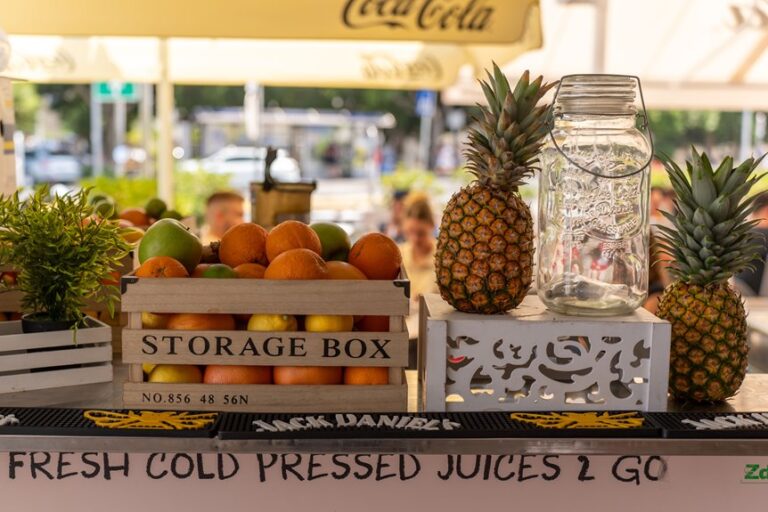
You’ll get the best orange juice when you choose sweet varieties such as Navel or Valencia, since they provide a smooth, bright flavor.
Choose oranges that feel heavy for their size, because that usually means they’re full of juice and ready to squeeze. Also, look for thin, firm skin with a slight give, since that often indicates the fruit is ripe without being too soft.
Sweet Orange Varieties
When you want sweet orange juice that tastes bright and smooth, the type of orange you choose matters a lot. Navel oranges usually produce a gentle, juicy cup, while Valencia oranges bring a lively, balanced sweetness.
If you prefer a softer sip, try these sweet orange blends:
- Navel and Valencia for a crowd friendly taste
- Cara Cara for a berry like twist
- Blood orange mixed with Navel for dessert style orange profiles
Choose oranges that match your taste, not just the market display. Each variety brings its own character, so you can make a juice that feels right for you.
Pick fruit with thin skin and a fresh scent, then let the natural sweetness stand out. That way, your glass tastes welcoming and straightforward.
Ripeness And Juiciness
Great juice starts with the right fruit, and ripeness does much of the work for you. When you pick oranges at peak maturity, you usually get sweeter juice and better yield, so you do not need to add extra sugar to improve the flavor. Look for fruit that feels heavy for its size, since that often means more liquid inside.
| Sign | What it means | Why you care |
|---|---|---|
| Heavy in hand | More juice inside | Better yield |
| Even color | Mature fruit | Sweeter taste |
| Firm, not hard | Ready to juice | Easier pressing |
| Scent at the peel | Fresh ripeness | Brighter flavor |
If an orange smells fresh and gives slightly when you press it, it is usually a good choice. Trust that simple check, and you will be on the right track for a better glass.
Size And Skin Texture
Medium-sized oranges often give you the easiest juicing experience because they fit well in your hand and press down without much struggle. When you check orange size, pick fruit that feels full but not oversized, since very large oranges can be harder to handle. Next, notice the skin texture. You want a smooth, slightly firm peel that gives a little when you press it. That usually means the orange is ready and full of juice.
- Choose medium fruit for better control.
- Skip wrinkled skins because they often mean dryness.
- Look for bright, even color and a clean surface.
When you find oranges like this, you’ll feel more comfortable in your kitchen, and your juice will likely taste fresher, sweeter, and easier to enjoy with the people around you.
Make Orange Juice by Hand
If you want fresh orange juice without any fancy tools, making it by hand is easier than it looks. Start with ripe oranges at room temperature, then wash and dry them so your hands stay clean. Slice each orange in half and hold one half over a glass or bowl.
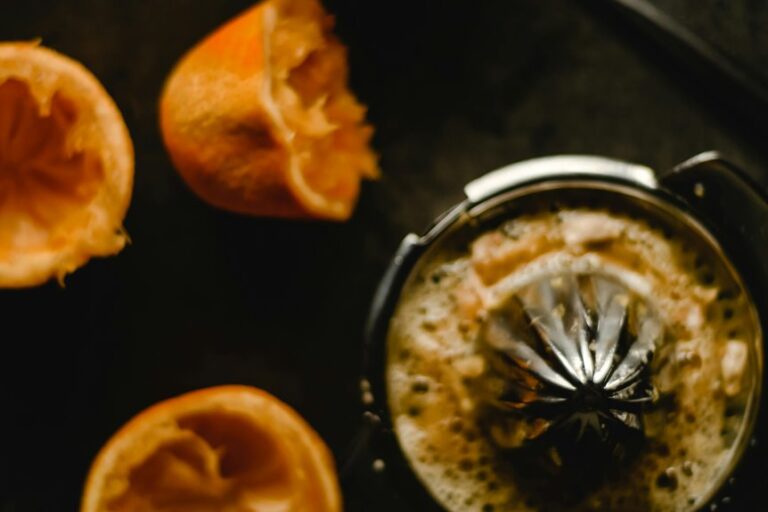
Use firm squeezing motions while you rotate the fruit to extract more juice. If seeds fall out, remove them right away so the drink stays sweet, not bitter. Keep going until the half feels flat and light.
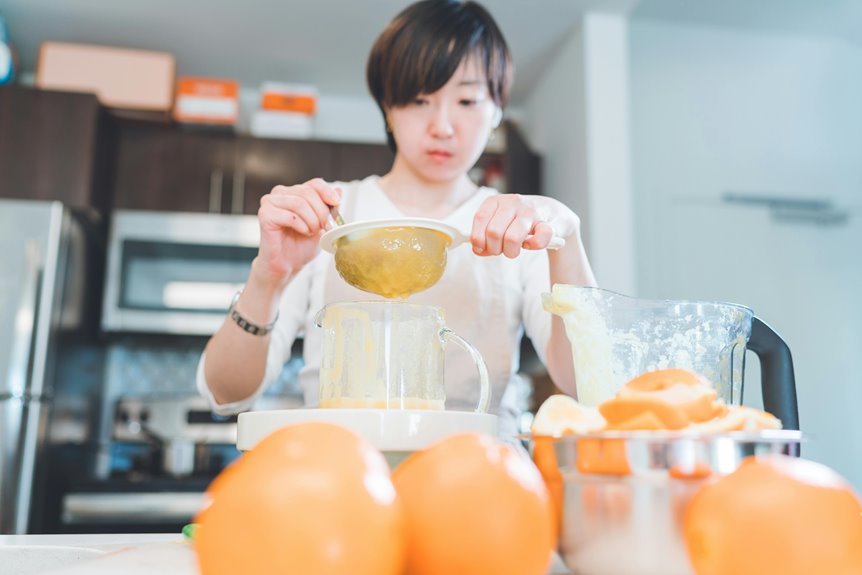
If you want less pulp, pour the juice through a fine strainer. With a little practice, this becomes simple, and your kitchen will smell great too.
Make Orange Juice With a Juicer
To make orange juice with a juicer, start by choosing fresh, ripe oranges that feel heavy and smell sweet.
Wash the fruit, set up your juicer, and get it ready so you can work smoothly without making a sticky mess.
Then feed the orange halves through the juicer, collect the juice, and serve it right away for the freshest taste.
Choose Fresh Oranges
Start with fresh, ripe oranges because the fruit you choose will shape the whole glass of juice. Good orange selection makes your juice sweeter, brighter, and easier to enjoy with friends or family.
Look for firm skins, a heavy feel, and a scent that says the fruit is ready. At room temperature, oranges usually release juice more easily, so you won’t have to fight the fruit.
- Pick oranges that feel dense and smooth.
- Choose navel oranges whenever you want a sweet, easy option.
- Skip fruit with soft spots or dried-out peels.
When you choose well, the juicer works with you, not against you. That small step helps you feel confident, and your kitchen starts to feel like your place.
Prepare The Juicer
Your juicer is about to do the heavy lifting, so give it a quick prep before you feed in the oranges. First, unplug it and clean and sanitize every part that touches fruit. Then dry each piece well, because extra water can make the juice run messy.
Next, check juicer parts like the cone, strainer, pulp bin, and spout. Make sure they fit snugly and move smoothly. If anything looks cracked, loose, or sticky, fix it now so you don’t slow yourself down later.
Set a bowl or pitcher under the spout, and place the machine on a steady counter. Keep a towel nearby for easy cleanup. When everything feels ready, you can start with confidence and enjoy the process with the rest of us.
Extract And Serve
Press the oranges and watch the juice flow into your bowl or pitcher. Keep the spout clear so every drop lands where you want it. As you press, twist the orange halves a little to help the juicer pull out more flavor and keep the flow steady. If your juice looks pulpy, stir it once so it feels balanced and familiar.
- Check the pulp and strain it if you want a smoother sip.
- Add ice if you want it cold and invigorating.
- Serve immediately so the bright taste stays fresh and lively.
You can pour it into glasses for your family, a friend, or just yourself after a long day. If it tastes a bit tart, add a touch of honey.
Strain and Adjust the Pulp
If you want a smoother glass of orange juice, strain it after squeezing or blending to remove seeds, extra pulp, and stringy bits. Pour the juice through a fine mesh sieve, nut milk bag, or cheesecloth, and let it flow without rushing. Then press gently with a spoon or clean hand to remove excess pulp and refine the texture.
If you prefer a fuller sip, stop sooner and keep a little pulp in the bowl. If you want a lighter drink, strain it again until it feels right. Trust your taste and adjust it to suit your preference. A quick stir helps the juice stay even, and it keeps each glass fresh, bright, and welcoming.
Store Orange Juice in the Fridge
Once you have strained your orange juice to get the texture you like, it’s time to store it the right way so it stays fresh and tasty. Pour it into a clean fridge storage container with a tight lid, and leave a little space at the top. That helps you avoid spills when you move it around. Then place it on a cold shelf, not in the door, so the temperature stays steady.
- Chill it quickly after squeezing.
- Label the jar with the time.
- Drink it within 24 hours for the best shelf life.
If you want to share it later with your family, give it a gentle shake first. This helps keep the flavor even and makes each glass taste like the juice you made yourself.
Frequently Asked Questions
How Do I Make Orange Juice Sweeter Without Adding Sugar?
Use riper oranges at room temperature, because ripe oranges naturally taste sweeter. You can also blend in a few sweet orange segments and strain out less pulp, which can make the juice taste smoother and fuller.
Can I Freeze Fresh Orange Juice for Later Use?
Yes, you can freeze fresh orange juice for later use. For the best results, store it in airtight containers, leave some space for expansion, and thaw it in the refrigerator. The flavor should remain good.
How Do I Prevent Orange Juice From Separating?
You cannot fully stop separation, but you can slow it. Keep the juice cold, stir before serving, and add pulp for body. A little texture can be a sign of something real, shared, and yours.
What’s the Best Way to Clean a Juicer After Use?
Clean it best by disassembling the juicer, rinsing the parts immediately, and scrubbing away residue with warm soapy water. Dry everything thoroughly, then reassemble it so it is ready for next use.
Can I Use Blood Oranges Instead of Navel Oranges?
Yes, you can use blood oranges instead of navel oranges, and you will get a richer blood orange flavor. Your choice of citrus variety changes the sweetness and color, but you will still make fresh, delicious juice.