You can blend raw vegetables, but the key most people miss is that texture changes fast once water hits the blade. When you start with the right vegetables and add liquid first, you can make smooth drinks, creamy sauces, and even cold soups that taste fresh instead of grassy. Some vegetables blend easily, while others stay chunky and stubborn, so a few simple steps can improve your next mix.
Can You Blend Raw Vegetables?
Yes, you can blend many vegetables raw, and for many people, that’s the fastest and easiest way to make a smoothie, sauce, or cold drink.
With basic raw blending, wash produce well, trim damaged spots, and cut pieces into small pieces so your blender can work efficiently. For safety, use clean water, fresh greens, and discard wilted or damaged leaves. Add the liquid first, then the vegetables, for a smoother blend. If you want a gentler texture, choose soft produce and blend until the mixture looks even.
Best Vegetables to Blend Raw
You can get great results by starting with leafy greens like spinach and kale because they blend smoothly and keep the flavor fresh. Cucumbers and celery also work well when you want a light, crisp mix, though celery may need a stronger blender for the smoothest texture.
If you want a sweeter blend, berries and apples can balance the greens and make your drink easier to enjoy.
Leafy Greens
Leafy greens are some of the easiest vegetables to blend raw, which is why they show up so often in smoothies and green drinks.
When you use spinach, you get a mild flavor and solid spinach nutrition, so your blend feels gentle and easy to enjoy.
Kale can also work well, especially in kale smoothies, provided you pair it with fruit or a creamy base.
To keep your drink smooth, wash the leaves well, trim any tough stems, and pack them loosely into the blender.
Start with liquid first, then add the greens. That order helps you blend faster and avoids a stuck blade.
With fresh greens, you can make a bright drink that feels simple, nourishing, and easy to make your own.
Cucumbers And Celery
Wondering which vegetables truly shine when blended raw? You will find cucumbers and celery easy to love. Cucumbers bring crisp hydration and help blends taste cool and refreshing. Celery adds lift, but its texture can turn stringy, so chop it small first. When you want a smoother sip, trim tough stalk ends and blend with enough liquid.
| Vegetable | Raw blend note |
|---|---|
| Cucumber | Cool, mild, juicy |
| Celery | Fresh, earthy, fibrous |
| Both | Pair well together |
| Prep | Wash well and trim |
| Result | Light, invigorating blend |
If you want a simple place to start, these two are a solid choice. Use a high-speed blender, then blend briefly for a smoother finish.
Berries And Apples
Berries and apples can make a raw blend feel bright, sweet, and easy to enjoy. When you use them with raw vegetables, you get a drink that feels familiar and welcoming, not too heavy.
You can rely on berry smoothies for color and tang, then add apple blends for gentle sweetness. This helps soften stronger greens like spinach or kale, so your mix tastes balanced.
If you want a smoother sip, wash everything well, trim bruised spots, and slice apples at the start. Then add a little liquid, blend until silky, and taste before adding more.
You’ll often feel like you’re making something fresh for your own group, even when you’re blending for one.
Vegetables That Need Extra Prep
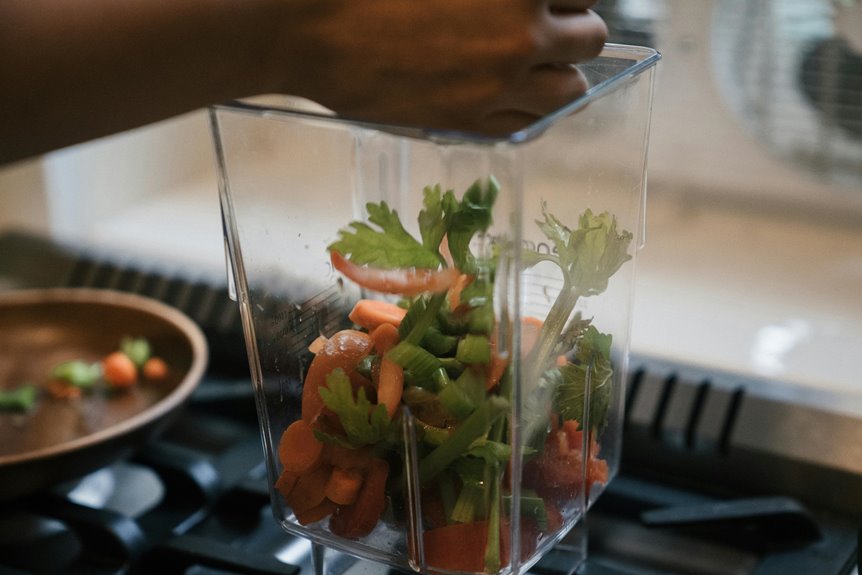
Some vegetables need a little extra prep before you blend them raw, and that small step can make a big difference in texture and taste. You’ll get better results when you handle tougher produce with care. Beans need cooking before blending, and hard roots like carrots often do better with a quick steam. For stringy vegetables, try peeling away the fibrous outer layer so you don’t end up with a gritty sip.
- Trim woody ends from celery.
- Remove the tough outer layer from broccoli stems.
- Wash greens thoroughly and discard damaged leaves.
- Cut dense vegetables into small pieces.
That simple prep helps your blender work with you rather than against you. It also keeps your mix smoother, so your drink feels fresh and easy to enjoy.
How to Blend Raw Veggies Smoothly
You’ll get a smoother raw blend when you start with soft vegetables like tomatoes, cucumbers, or avocado, since they break down quickly and keep the texture light.
Add enough liquid at the start so the blades can move freely, then add the vegetables a little at a time instead of crowding the blender.
If the mixture still feels chunky, stop and blend in stages so you can guide it toward a creamy finish without straining the machine.
Choose Soft Vegetables
Soft vegetables are the easiest place to start when you want a smooth raw blend because they break down quickly and keep the texture light. When you choose soft vegetables, raw blending feels less like a struggle and more like a simple process. Tomatoes, cucumbers, and avocado all blend easily, so you get a creamier result with little effort.
- Pick ripe tomatoes for a juicy base.
- Use cucumbers for a cool, mild taste.
- Add avocado for a rich, silky finish.
- Try spinach or lettuce for a mild green boost.
If you’re new, start with one soft vegetable and build from there. This approach helps you gain confidence, and your blender won’t seem as demanding. Over time, you’ll find blends that suit your taste and your kitchen routine.
Add Enough Liquid
Even the best soft vegetables can turn thick if you don’t give the blender enough help, so adding liquid makes the whole job much smoother. You don’t need much, but you do need enough to keep the blades moving and help your mix feel like one team instead of a stubborn crowd. Start with water, broth, or juice, then watch the liquid ratio as you blend. If the blades stall, add a little more. If the mix looks too thin, stop sooner next time and adjust. Your goal is a smooth blending consistency that pours well and still feels full.
For leafy greens, a bit more liquid often helps them blend better, while firmer raw vegetables may need extra patience and a splash more help.
Blend In Stages
Start by blending raw vegetables in stages, because that simple step can help you avoid a chunky, overworked mess. You’ll feel more in control when you use layered blending and a smart ingredient order. First, blend your liquid with soft greens such as spinach or cucumber. Then add firmer pieces in small handfuls so the blades keep moving and the mixture stays smooth.
- Start with the thinnest base.
- Add soft vegetables before hard ones.
- Pulse, then blend longer if needed.
- Stop and scrape the sides.
This approach helps you get a smooth drink faster, without stress. If your blender strains, pause and let it catch up. A few short rounds often work better than one long run, and your raw mixture will taste fresher too.
Why Raw Veggies Are Worth Blending
Raw veggies are worth blending because they offer a fast, fresh way to add more nutrition to a glass or bowl without much effort. You stay close to the food’s natural taste, and many people appreciate choosing a bright, clean option that fits their day. With gentle blending, you can support nutrient retention and enzyme preservation while keeping meals simple. That matters when you want something that feels good and belongs on your table, not just in a recipe.
| What you gain | How it feels |
|---|---|
| Fresh color | Uplifting |
| Crisp flavor | Familiar |
| Easy prep | Relieving |
| Shared routine | Connecting |
You can also mix spinach, cucumber, tomato, or kale and still get a drink that feels lively. That small win can make healthy habits feel shared, not lonely.
When Raw Veggie Blends Don’t Work Well
Sometimes a veggie blend misses the mark because the ingredients fight the blender instead of flowing together. You might notice this with fiber-heavy blends that stay gritty, cling to the jar, or turn into a thick paste that the blades can’t move.
- Raw celery and broccoli can stay stringy.
- Dense carrots and potatoes don’t break down well.
- Bitter raw flavors can take over quickly.
- Wilted greens can make the mix taste flat.
If you want a smoother result, you need produce that works well together. Soft vegetables and clean leafy greens usually blend better, while tougher raw pieces can make the whole batch feel rough. That’s why some blends seem stubborn from the first spin. You aren’t doing anything wrong; the ingredients just aren’t a good match right now.
How to Improve the Taste
If your blend tastes too sharp, grassy, or rough, you can usually improve it without giving up on raw vegetables. Start with sweetness enhancers like ripe pear, apple, mango, or a few frozen grapes, because they soften bitter edges quickly. Then add a small pinch of salt, a squeeze of lemon, or fresh herbs so the flavors work together instead of competing.
Next, taste after each addition rather than adding everything at once, so you can keep the balance under control. You can also use creamy avocado or plain yogurt to smooth the texture and make the drink feel more approachable. With careful blending, you get a mix that tastes better and is easier to enjoy.
Best Ways to Use Raw Veggie Blends
What can you do with a fresh veggie blend? You can pour it into smoothie bowls, stir it into salad dressings, or chill it into cold soups that feel cool and welcoming.
If you want a simple, nourishing habit, start with spinach, cucumber, or tomato, then add herbs for a brighter taste. A raw blend also works well as a quick sauce for grain bowls or a dip for crunchy snacks.
- Use it as a base for zesty dressings
- Sip it chilled after a busy day
- Stir it into cold soups for lunch
- Share it with friends at the table
When you blend raw vegetables, you join a crowd that likes easy meals without losing freshness. So you can keep it clean, colorful, and friendly, one glass at a time.
Simple Raw Veggie Recipes
A simple raw veggie recipe can feel like a small win on a busy day because you get fresh flavor without a long kitchen fight.
You can start with a carrot ginger blend by washing carrots well, chopping them small, and adding a little fresh ginger, water, and ice. If you want something softer, try cucumber, spinach, and avocado for a creamy green mix that feels easy and smooth. For a brighter sip, make a beet apple blend with peeled beet, chopped apple, and lemon. Add liquid first, then blend until smooth. If the mix feels stringy, chop the ingredients finer or strain it. With a few clean ingredients, you can make food that fits easily into your day.
Frequently Asked Questions
Can Raw Vegetable Blends Be Frozen for Later Use?
Yes, you can freeze raw vegetable blends for later use, but you will notice texture changes after thawing. For freezer safety, use airtight containers, leave headspace, and thaw slowly. Stir before you enjoy it.
How Long Do Raw Vegetable Blends Stay Fresh?
You’ve got only 24 hours in the fridge if you want real freshness. Check signs like color and smell, because storage time drops quickly; the longer you keep it, the faster quality declines.
Do Raw Vegetable Blends Need Peeling First?
You do not always need to peel raw vegetable blends, because it depends on peel texture and skin safety. You can keep thin, clean skins on cucumbers or carrots, but peel tough, bitter, or dirty skins first for a smoother blend.
Can You Blend Raw Vegetables With Fruit?
Yes, you can blend raw vegetables with fruit, and you will often get great fruit pairings along with better flavor balance. Use sweet fruit with mild greens, wash everything well, and you will create a fresh blend you will enjoy.
Should Raw Vegetable Blends Be Strained?
You do not have to strain them unless you want a smoother sip. Keeping the pulp preserves fiber and texture, while straining makes the blend lighter. Choose the option that feels most comfortable and satisfying for you.