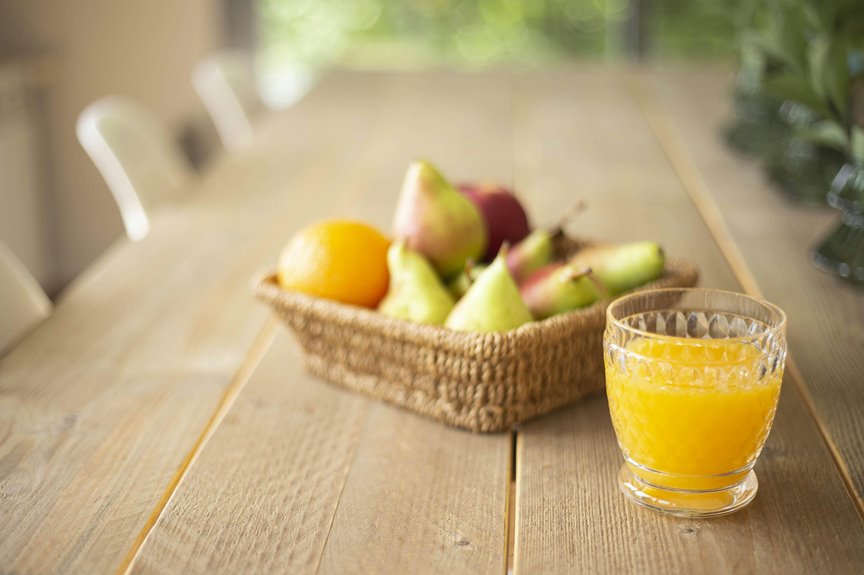
Yes, you can juice pears, and you will likely be surprised by how smooth and sweet the result is. If you choose ripe Bartlett, Anjou, or Bosc pears, you will get more juice and better flavor, so the drink feels soft, fragrant, and easy to enjoy. Then peel, core, and cut the pears before using a juicer. Add a little lemon if you want a brighter taste. Keep the juice cold because fresh pear juice changes quickly, and the flavor can shift in unexpected ways.
Can You Juice Pears?
Juicy pears can absolutely go into a juicer, and the good news is that they usually make a sweet, smooth drink with very little fuss. You can rely on these pear juice basics whenever you want something fresh and easy.
Wash the fruit, cut out the core, and feed the pieces through your machine. Ripe pears give you better juice, but you don’t need perfection to make it work.
When you’re curious about pear juice nutrition, you’ll find water, natural sugars, potassium, and some vitamin C in each glass. Because juicing removes most fiber, you get a lighter drink than a whole pear. Still, it can fit nicely into your day and provide a bright, simple boost.
Best Pears for Pear Juice
You’ll get the best pear juice from sweet varieties like Bartlett, Anjou, and Bosc because they add more flavor and create a smoother finish.
For easier juicing, choose pears that feel ripe but are still firm, since they press well without becoming mushy.
In the next steps, you’ll see which pears offer the best balance of sweetness, juice yield, and clean texture.
Sweet Pear Varieties
For the sweetest pear juice, a few standout varieties make the process easier and tastier.
Bartlett is a reliable choice because its sweetness gives your glass a bright, juicy lift. Anjou also works well, since its flavor stays smooth and mellow, creating a rounder sip. If you want more depth, Bosc adds a warmer tone that keeps the blend interesting.
Mix these pears together, and you can adjust the flavor to your taste without much fuss. You don’t need fancy techniques, just choose fruit that tastes good to you and let the natural sugars do their work. That way, your juice feels fresh, balanced, and suited to your kitchen.
Soft, Ripe Pears
Soft, ripe pears are often the best choice when you want pear juice with a rich taste and little effort.
They deliver fuller flavor, and the fruit breaks down quickly, which makes juicing simple.
When you choose pears with a little give, you get ripe sweetness without slipping into mushy fruit.
That balance helps create juice that feels bright, smooth, and pleasant on the palate.
For gentle pressing, soft pears release more liquid, so you don’t have to work hard with the fruit.
If you want a glass that tastes warm and inviting, this kind of pear is a strong choice.
Use fruit that still smells fresh, and you’ll stay in that sweet spot.
Best Juicing Pears
Bartlett, Anjou, and Bosc pears usually make the best juice because they offer strong sweetness and plenty of liquid. These classic varieties are a good choice when you want a bright, easy glass at home.
For pear selection tips, choose fruit that feels ripe but still firm, since mushy pears can dull flavor and reduce juice yield. Next, pick pears with smooth skin and a fragrant smell, because that often means more juice inside.
Then remove the core and cut the pears into smaller pieces so your juicer works faster. For juice yield basics, cold press machines usually extract more liquid, but a centrifugal juicer still performs well with clean, fresh fruit.
If you add lemon, you’ll help keep the color lively and the taste crisp.
What Does Pear Juice Taste Like?
Pear juice tastes soft, sweet, and lightly floral, with a mellow flavor that feels smoother than sharp or tangy fruit juices.
You’ll notice mild sweetness at first, followed by a light floral aroma that makes each sip feel calm and pleasant.
It doesn’t have a strong flavor, so it’s easy to enjoy whenever you want something gentle.
Because pears are juicy and naturally subtle, the taste can feel clean and fresh, almost like a quiet dessert in a glass.
If you prefer drinks that don’t overpower your palate, pear juice is a good fit.
You may also notice a bit of natural fruit richness, which adds warmth without making it heavy or overly sugary.
How to Juice Pears at Home
If you want fresh pear juice at home, the good news is that the process is simple and forgiving.
Start by choosing ripe, firm pears that smell sweet and feel heavy. Wash them well, then core and chop them so they’re easy to work with.
- Pick Bartlett, Anjou, or Bosc for good flavor
- Remove bruised spots before you begin
- Cut the fruit into small, even pieces
- Add a little lemon juice if you want brightness
- Store the juice promptly in a sealed container and chill it
As you make it, you’ll get a quick, satisfying result.
Pour the juice right away, or keep it cold and drink it soon for the best taste.
Pear Juice With a Juicer
Before you juice pears, wash them well, core them, and cut them into smaller pieces so your machine can work smoothly.
A cold press juicer usually gives you more juice and keeps the flavor bright, while a centrifugal juicer moves faster but may need more prep.
If you choose ripe but still firm pears, you’ll get a sweeter drink and less waste.
Preparing Pears For Juicing
Ripe pears make juicing much easier, and the prep work is simple enough that you won’t feel like you need a kitchen degree. Start by washing the pears under cool water, then dry them so grit doesn’t end up in your juice.
Next, remove the stems, core, and seeds, since that helps keep the flavor clean and the texture smooth. When you cut the fruit into smaller pieces, you help your juicer work with less effort, and you stay more in control.
- Choose ripe, firm pears
- Scrub the skins gently
- Slice away bruised spots
- Cut around the core
- Keep pieces even
If you’re juicing with friends or family, this step can feel simple and shared. A little care now gives you pear juice that tastes fresh and welcoming.
Juicer Types And Yield
Cold press juicers usually provide the best pear juice yield, which is helpful when you want to get the most from your fruit. The juice often tastes fuller because the machine squeezes slowly and leaves less liquid in the pulp. That higher yield helps reduce waste and makes prep feel more efficient.
Centrifugal models work faster, so they suit busy days, but their efficiency is usually lower with pears because the fruit is soft and can leave wetter pulp. Even so, you can still get a decent amount of juice if you cut the pears into small pieces and feed them steadily. If you’re choosing a juicer for your kitchen, pick the one that best matches your pace and your preference for fresh juice.
Pear Juice Without a Juicer
Although you don’t have a juicer, you can still make fresh pear juice at home with tools you probably already own. Try the blender method first. Chop ripe pears, add a splash of water, then blend until smooth.
Next, use a fine sieve or cloth to mash and strain the pulp into a bowl. You’ll get a soft, sweet drink that feels homemade and welcoming.
- Choose ripe pears for better flavor
- Remove the core before blending
- Add lemon juice for brightness
- Press gently to keep more liquid
- Chill the juice before serving
When you want a smoother sip, strain twice. When you want a little texture, stop sooner. Either way, you’re making something fresh that fits into your kitchen routine and your day.
Do You Need to Peel Pears?
You don’t have to peel pears before juicing, but peeling them can produce a smoother, cleaner drink.
If you keep the skin on, you’ll get a little more fiber and some extra nutrients, though the juice may taste slightly more earthy. The choice depends on whether you want a silkier juice or a bit more of the pear’s natural goodness.
Peel For Smoother Juice
For a smoother pear juice, peeling the fruit can help, but it isn’t always required. If you want a better texture, start by choosing ripe pears and removing the skin before juicing. You’ll often get a cleaner, smoother finish that feels more polished in every sip.
- Peel the pears after washing them well.
- Cut away any bruised spots.
- Remove the core before juicing.
- Use peeled pear pieces for a softer blend.
- Strain the juice if you want extra silkiness.
When you skip the peel, you may notice a little more grit, so peeling can be a small improvement in your kitchen routine. Still, the choice is yours. If you want juice that feels light and easy to drink, peeling gives you that smoother result with little effort.
Keep Skin For Fiber
Keeping the skin on often gives pear juice a little extra body and a boost of fiber. When you want more pear skin fiber, skip peeling and wash the pears well. You will also keep some nutrients from the fruit’s outer layer, which can add a bit of color and a fresh, earthy tone.
| Choice | What you get |
|---|---|
| Peel it | Smoother juice |
| Keep it | More fiber and nutrients |
| Blend well | Less texture, more comfort |
When you are juicing for your crew, this can feel like a small win. The skin will not make the juice heavy, but it can help you feel more satisfied. Just remove the core, cut the pears, and juice them right away for the best taste.
How to Keep Pear Juice From Browning
Pear juice can turn brown quickly, but a few simple steps can slow that process and help it stay fresh-looking. Quick handling and the right ingredients can protect its color and help preserve antioxidants.
- Add a small amount of lemon juice to increase acidity.
- Chill the juice as soon as you finish making it.
- Fill the container close to the top.
- Use a tight lid to limit exposure to air.
- Stir in the lemon juice before storing.
Reducing air exposure and adding acid slows the browning reaction that affects appearance. If you’re serving the juice to friends or family, these steps help keep it bright, appealing, and ready to pour.
How to Keep Pear Juice Fresh
Once you have made pear juice, the clock starts ticking, so the best way to keep it fresh is to cool it quickly and limit air exposure.
Put it in clean, airtight storage containers and fill them close to the top. That leaves less space for air, so the flavor stays brighter.
Keep the juice in the coldest part of your fridge, not the door, where temperatures change more.
If you want it to last longer, freezing portions in small jars or ice cube trays works well. Then you can thaw only what you need, and your next glass still feels fresh.
Use clean utensils each time you pour, because small bits of food can shorten the life of your juice quickly.
Pear Juice Recipe Ideas
If you have a few ripe pears on hand, you can turn them into juice that feels light, sweet, and easy to enjoy. You can also adapt it to match your mood, from a simple sip to something fun for friends. Try these easy ideas:
- Blend pear with lemon for a bright, fresh glass.
- Add ginger for a warm, lively kick.
- Mix pear juice with banana and yogurt for a smoothie.
- Stir in mint for a cool, fresh finish.
- Use it in pear juice cocktails with sparkling water and lime.
If your pears taste extra sweet, you won’t need much else. If they’re mild, a splash of citrus helps. You can keep one base recipe and change it up, which makes your kitchen feel more like your space too.
Health Benefits of Pear Juice
Although pear juice shouldn’t replace whole fruit, it can still offer a few helpful benefits when you enjoy it in moderation. It provides quick hydration because pears contain a lot of water, which can feel refreshing after a busy day.
You also get natural antioxidants from pear compounds, which help support your body’s defenses. In addition, pear juice offers potassium, a nutrient that helps your muscles and heart work well.
Since it’s lightly sweet, it can also give you a gentle energy lift when you need one. Still, it’s best to treat it as a small part of your routine, not the main focus.
That way, you can enjoy the taste and still make smarter choices.
Common Pear Juicing Mistakes
One common mistake is picking pears that are too soft, because mushy fruit often makes cloudy, thin juice with a dull flavor. You’ll get better results if you choose ripe but firm pears and prep them well. If you rush, small mistakes can spoil the batch.
- Wash the pears first.
- Remove the core and seeds.
- Cut the fruit into smaller pieces.
- Avoid overloading the juicer.
- Don’t use underripe pears.
Also, don’t ignore your juicer’s limits. If you fill it too full, the machine strains, and your juice becomes uneven.
If you use underripe pears, the taste can be tart and bland, which leads to disappointing results. Instead, work in small batches and stay patient. That way, you can make smooth, sweet pear juice without the mess.
Frequently Asked Questions
Can You Freeze Pear Juice for Later Use?
Yes, you can freeze pear juice for later use, and it will keep best with proper freezing methods. Use airtight containers, leave some headspace, label the date, and follow storage tips to protect flavor and freshness.
Is Pear Juice Safe for Babies?
Not usually. You should not give pear juice to babies unless your pediatrician says it is appropriate. Breast milk or formula is a better choice for digestion and hydration, since they meet your baby’s needs more effectively.
Can You Mix Pear Juice With Other Fruits?
Yes, you can mix pear juice with other fruits, and pear pairs well with apple, grape, or citrus. For fruit juice blending, balance sweetness with tartness so the drink tastes fresh and appealing.
How Much Pear Juice Should You Drink Daily?
You can start with 4 to 8 ounces daily, about half a glass, which lets you enjoy it without overdoing it. Keep an eye on serving size, since pear juice can raise sugar intake quickly, and it will fit in nicely.
Does Pear Juice Work in Cocktails?
Yes, pear juice works well in cocktails. It creates smooth pear cocktail blends with vodka, gin, or bourbon. Start with a pear juice to spirit ratio of about 2:1, then adjust the sweetness and acidity to suit your taste.